DungeonBox Abilities, Stats & XP
How heroes grow between jokes, skill checks, and card-voted battles.
Progression in DungeonBox is designed for a party that laughs as hard as it levels. Foxtail Games LLC markets a clear loop for all twelve heroes: earn XP, raise stats, and unlock abilities that change what your phone actions can pull off. Confirmed examples include Fireball, Pickpocket, and Diss Track, with a Bard stretch that can control the in-game playlist. This guide explains how to think about that growth before the December 1, 2026 Steam launch—and how it ties to skill checks, combat voting, and dungeon crawling in Lion’s Labyrinth.
The progression loop
- Play quests and events — handwritten adventures and random events keep XP flowing whether you are in a tavern brawl or a pirate escape.
- Bank experience — successful stories, clever votes, and survived fights feed the hero you locked at the room code screen.
- Raise stats — higher stats tip phone skill checks when you pick locks, spot traps, slap gnomes, or attempt long-shot ideas.
- Unlock abilities — signature moves expand both narrative options and combat card potential.
- Bring tools into the world — drawing magic items and monsters on your phone complements numeric growth with creative props.
You do not need a theorycraft spreadsheet to enjoy the demo, but understanding the loop helps a full eight-player table avoid five comedy kits and zero utility when the labyrinth demands keys and caution.
Stats and skill checks
Risky moves call for a skill check rolled on your phone. Class, stats, and items all tip the odds. A natural 20 becomes table legend; a natural 1 becomes a different kind of legend. Stats are the long-term investment that makes your favorite bit more likely to succeed when the party actually votes it through.
Practical habits:
- Spread early raises across the checks your role lens uses most (see Heroes).
- Remember items you draw or loot also modify outcomes—progression is not only a talent tree.
- Coordinate with the host’s content rating. Wild Diss Track energy on a Family Friendly slider frustrates everyone.
New players should finish Getting Started and How to Play so they know when checks appear in the loop.
Signature ability examples
Foxtail highlights three named unlocks in storefront copy. Treat them as examples of fantasy lanes, not a complete ability encyclopedia.
Fireball
Fireball represents direct power—the answer you want when votes swing toward blasting a problem. In combat voting nights, damage-leaning abilities make aggressive cards more attractive. Pair Fireball-minded heroes with players who enjoy leading the charge in labyrinth battles toward the Gilded Serpent’s hoard.
Pickpocket
Pickpocket represents utility and mischief. It fits exploration, social scams, and “can we steal the key instead of fighting the troll” plans. Utility stats plus Pickpocket-style tools shine when the party prefers clever exits over Super Blast survival stories.
Diss Track
Diss Track is pure party-game comedy: a mechanical excuse to roast the dungeon, the monster, or your friends while still participating in the RPG layer. It thrives when the rating slider allows sharper humor and when stream audiences can join votes. Comedy abilities still benefit from enough XP investment that the bit does not fail every roll.
Bard playlist stretch
Kickstarter stretch goals added fun songs and let the Bard character class control the playlist in-game. That is progression-adjacent: music becomes a player-authored mood tool, not just a settings menu. If your table cares about soundtrack bits, seat a Bard-inclined player and confirm audio routing on the host machine—covered in the party host checklist.
Abilities in combat voting
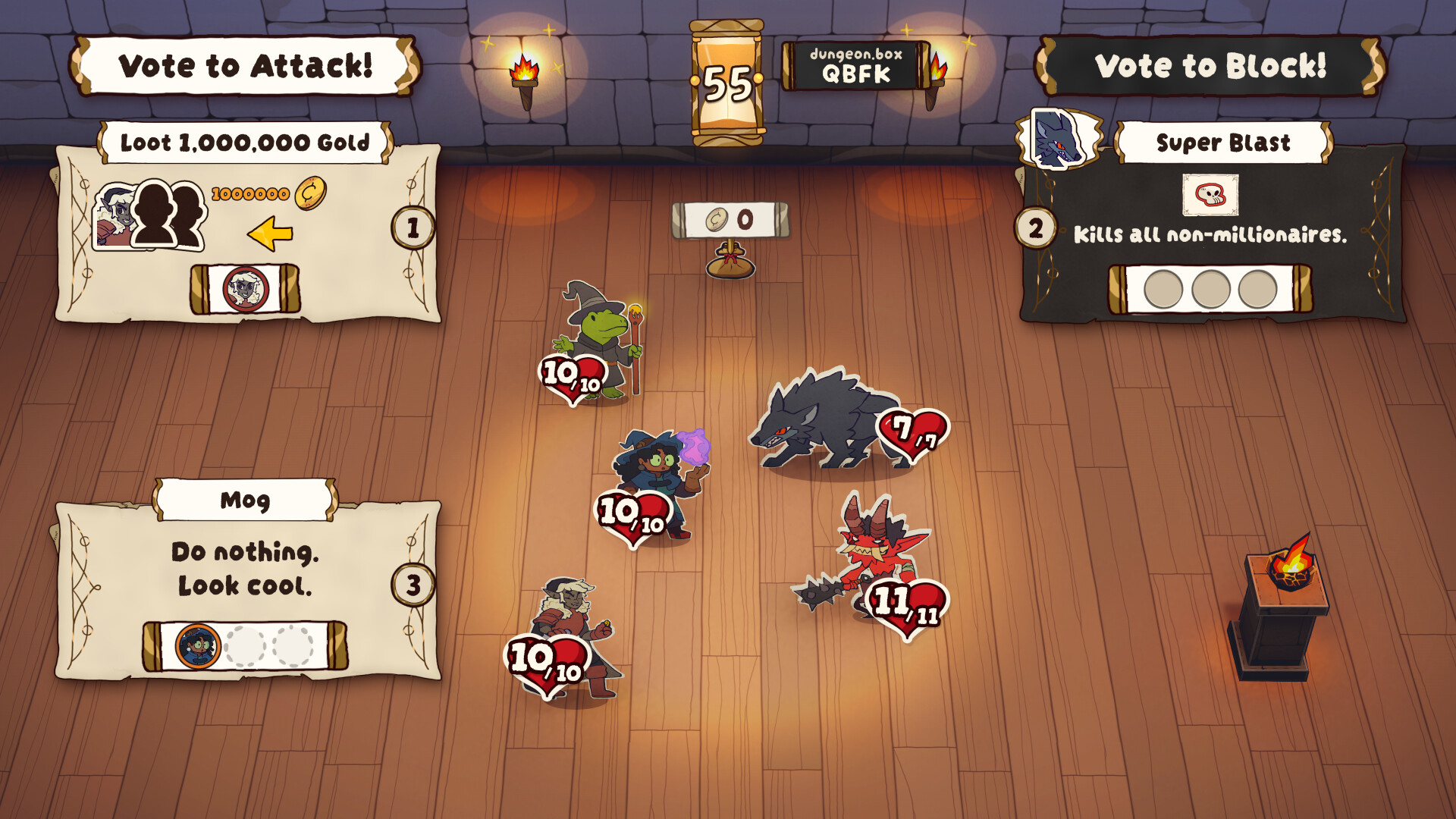
When a quest turns violent, the party votes on cards: back hero attacks, block nasty enemy moves, loot absurd gold, survive a Super Blast, or stand there looking cool. Abilities feed that shared decision space. A Fireball unlock changes which attack cards feel smart; a utility kit may prefer denial and setup. Because everyone votes, one over-leveled hero cannot solo the fight—XP still matters, but social consensus matters more.
Read the dedicated Combat Voting guide before a labyrinth marathon so ability timing and card literacy stay aligned.
Computer DM vs player DM
Ability text and outcomes still resolve through the table’s DM mode:
- Computer DM (optional AI narration with text-to-speech and automated filtering) keeps prompts moving so ability showcases happen without a human GM.
- Player DM lets a friend narrate consequences when someone lands Pickpocket or bombs a Diss Track.
Quests and art remain human-authored. AI, when enabled, narrates live responses to phone text. Hosts who stream can hide the room code while viewers vote as audience—ability flashiness becomes part of the show.
Party XP etiquette
DungeonBox is cooperative first. Good tables:
- Rotate spotlight so comedy kits and damage kits both get XP moments.
- Fill empty seats with CPU heroes when you want fuller combat card variety.
- Avoid griefing skill checks that waste the group’s momentum.
- Use How to Join to onboard late arrivals mid-campaign night without resetting everyone’s headspace.
Platforms and practice
Practice progression systems in the Steam demo on Windows or macOS. Full release targets December 1, 2026, with consoles planned later in 2026—see Release Date. Confirm your host meets system requirements so ability animations, narration audio, and eight phone connections stay smooth.
Kickstarter’s $594,124 from 9,835 backers funded the ambition behind these systems; your job at the table is to spend XP on the fantasy your friends will remember.
Related pages
- Players Hub — roster overview.
- Heroes — role lenses for the twelve classes.
- Heroes Tier List Hub — pre-release speculative role framework.
- Guides Hub, Links, wiki — more navigation.
Invest in stats that match how you actually type answers. Unlock abilities that match the rating and DM mode you booked. Then let the dice—and the vote—decide which Fireball or Diss Track becomes tonight’s story.
Frequently Asked Questions
Quick answers for hosts, heroes, and first-time players.
How do heroes get stronger in DungeonBox?
Earn XP through play, raise stats that tip skill checks, and unlock abilities such as Fireball, Pickpocket, and Diss Track.
Do stats affect phone skill checks?
Yes. Class, stats, and items all influence the odds when you roll a risky action from your phone.
What is special about the Bard?
A funded stretch goal lets the Bard class control the in-game playlist, turning music into a player tool.
Does AI change ability progression?
No. Optional AI is for live narration. You can use a player DM instead. Ability unlocks still come from XP and play.